192.168.0.100 Router Login Guide
Managing your home or office network becomes much easier when you understand how router IP addresses work. One address that many users encounter is 192.168.0.100. Although it is not as common as addresses like 192.168.1.1 or 192.168.0.1, it is still widely used within local networks and can sometimes be associated with router management, access points, printers, cameras, and other network devices.
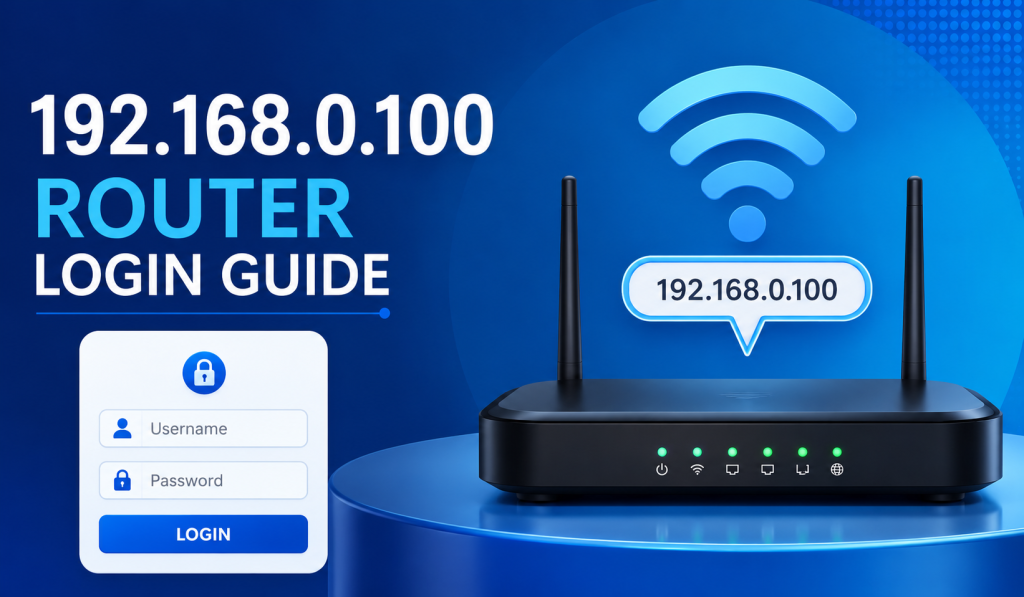
192.168.0.100 Router Login
LoginWhat Is 192.168.0.100?
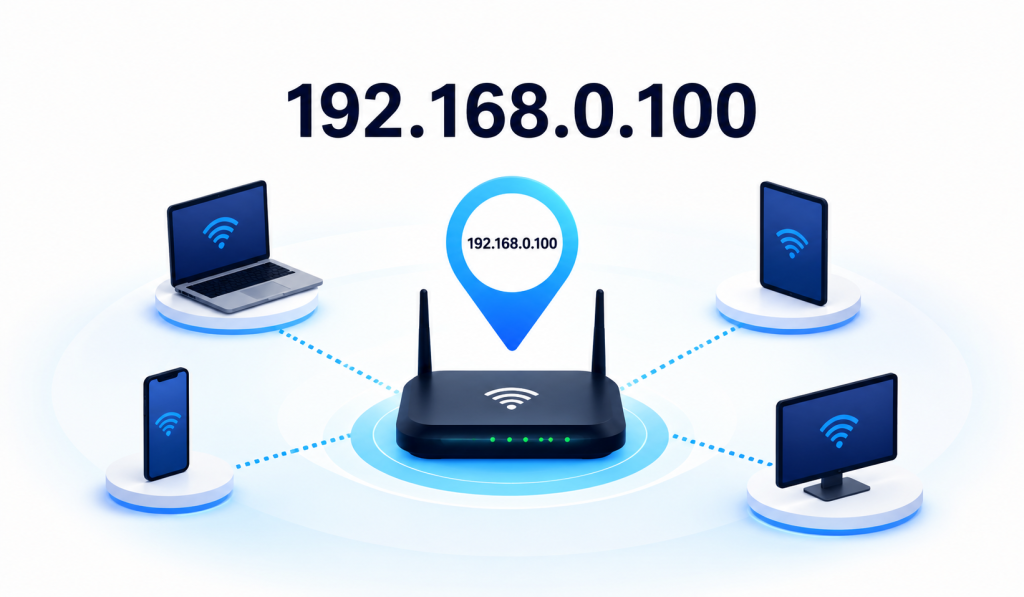
192.168.0.100 Login is a private IPv4 address that belongs to the range of addresses reserved for local networks. Private IP addresses are not accessible directly from the internet. Instead, they are used inside homes, offices, schools, and businesses to help devices communicate with each other.
Every device connected to a network needs an IP address. Routers automatically assign these addresses to connected devices through a process called DHCP (Dynamic Host Configuration Protocol).
- Desktop computers
- Laptops
- Smartphones
- Printers
- Security cameras
- Access points
- Smart home devices
Understanding Private IP Addresses
To better understand 192.168.0.100, it helps to know the difference between public and private IP addresses.
A public IP address is assigned by your internet service provider and is visible on the internet. It identifies your entire network online.
A private IP address works only inside your local network. These addresses cannot be accessed directly from outside the network, which improves security.
- 192.168.0.0 to 192.168.255.255
- 10.0.0.0 to 10.255.255.255
- 172.16.0.0 to 172.31.255.255
Is 192.168.0.100 a Router IP Address?
One important thing to understand is that 192.168.0.100 is often not the primary router gateway address. Most routers use addresses such as:
- 192.168.0.1
- 192.168.1.1
- 192.168.1.254
- 192.168.100.1
However, some network administrators manually assign 192.168.0.100 to networking equipment, access points, or management interfaces.
How to Login to 192.168.0.100
If your network useOnce you confirm that 192.168.0.100 is your router address, you can access the admin panel.
- Connect to the Network: Make sure your device is connected to the router through WiFi or Ethernet before attempting access.
- Open a Browser: Launch any modern browser such as Chrome, Edge, Firefox, Safari, or Opera for the login process.
- Enter the Address: Type 192.168.0.100 directly into the browser address bar and press Enter on your keyboard.
- Wait for Login Page: The router login screen should appear within a few seconds if the address is correct.
- Enter Credentials: Provide the administrator username and password required by your router model and configuration settings.
- Access Dashboard; After successful authentication, the router dashboard will open and display available management options.
What Can You Do After Logging In?
The administration panel provides access to numerous settings.
- Change WiFi Name: Updating the network name makes it easier to identify your wireless connection among nearby networks.
- Change WiFi Password: A strong password prevents unauthorized users from accessing your internet connection and connected devices.
- View Connected Devices: Monitor every device currently using your network and remove unfamiliar devices if necessary.
- Configure Security Settings: Adjust encryption methods and strengthen protection against unauthorized network access and cyber threats.
- Update Firmware: Installing firmware updates improves stability, security, compatibility, and overall router performance over time.
- Set Parental Controls: Restrict access to specific websites, applications, or internet usage schedules for family members.
How to Change Your WiFi Password
Changing your password regularly improves network security.
- Login to the router dashboard using administrator credentials.
- Navigate to Wireless Settings or WiFi Settings.
- Locate the Security or Password section.
- Enter a new strong password containing letters, numbers, and special characters.
- Save the changes and wait for the router to update.
- Reconnect all devices using the newly created password.
Tips for Creating a Strong WiFi Password
A strong password helps protect your network from unauthorized access.
- Use at least twelve characters combining letters, numbers, and symbols for better protection against attacks.
- Avoid using birthdays, names, phone numbers, or predictable personal information in passwords.
- Create unique passwords that are not reused across multiple online accounts or services.
- Update your wireless password periodically to reduce long-term security risks and unauthorized access.
- Use a password manager to store complex passwords safely and securely.
Common Login Problems and Solutions
Sometimes users experience issues while accessing the router interface.
Problem 1: Login Page Not Opening
- Possible causes include incorrect IP address or network connectivity issues.
- Solution: Verify your default gateway and ensure the device is connected properly.
Problem 2: Username or Password Incorrect
- This usually occurs when credentials have been changed previously.
- Solution: Check stored passwords or perform a factory reset if necessary.
Problem 3: Browser Errors
- Browser cache or cookies can occasionally interfere with router login pages.
- Solution: Clear browser data and try again using a different browser.
Problem 4: Slow Router Response
- Heavy network activity may slow down the administration interface.
- Solution: Restart the router and disconnect unnecessary devices temporarily.
Important Things to Know Before Resetting
Resetting a router removes all customized settings.
- WiFi name
- WiFi password
- Port forwarding rules
- Firewall settings
- DNS configuration
- Parental controls
- Device restrictions
Final Thoughts
192.168.0.100 is a private IP address commonly found within local networks and occasionally used for router or network device management. Understanding how it works makes it much easier to access your router, modify WiFi settings, improve security, and solve connectivity issues.Whether you need to change your wireless password, update firmware, monitor connected devices, or troubleshoot login problems, the router administration panel provides complete control over your network.