192.168.3.1 Router Login & Admin Setup Guide
Many routers use a private IP address as a gateway that allows users to access the router’s settings page. One of these addresses is 192.168.3.1. By entering this address into a web browser, you can open the router’s administration panel and manage important network settings. Whether you want to change your WiFi password, update security options, monitor connected devices, or troubleshoot network issues, the router dashboard provides all the necessary controls.
192.168.3.1 Router Login
LoginWhat Is 192.168.3.1?
192.168.3.1 IP is a private IPv4 address commonly used by certain routers, wireless gateways, and networking devices as their default gateway. A default gateway acts as the main access point between your local network and the internet. Unlike public IP addresses, private IP addresses work only inside local networks and cannot be accessed directly from the internet. When a router uses 192.168.3.1 as its default address, users can enter it into a web browser to access the router’s login page.
How to Access the 192.168.3.1 Login Page
Accessing the router login page is usually a simple process. Make sure your device is connected to the router before attempting to open the administration panel.
- Connect your computer, smartphone, or tablet to the router through WiFi or an Ethernet cable connection first.
- Open a modern web browser such as Chrome, Firefox, Edge, Safari, or any browser you regularly use.
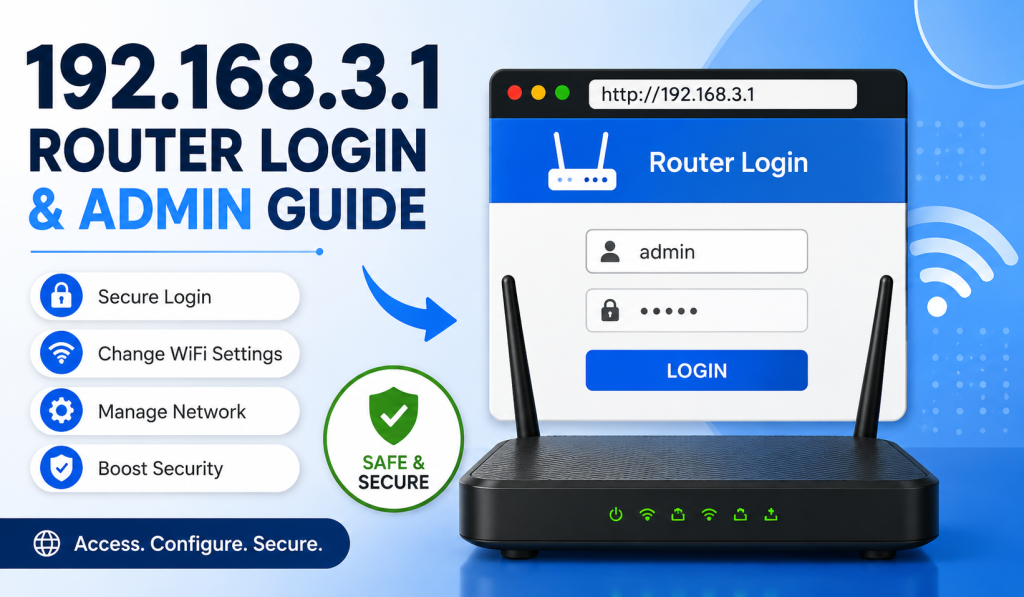
- Type 192.168.3.1 directly into the browser’s address bar without adding extra spaces or characters.
- Press the Enter key and wait a few seconds while the router login page loads completely.
- Enter the correct username and password associated with your router’s administration panel when prompted.
- Click the Login button to access the router dashboard and begin managing network settings safely.
Step-by-Step 192.168.3.1 Login Guide
If you are logging into your router for the first time, follow these simple instructions carefully.
- Verify that your device is connected to the same network managed by the router using 192.168.3.1.
- Launch your preferred browser and ensure the internet connection remains stable throughout the login process.
- Enter 192.168.3.1 in the address bar and avoid typing it into a search engine.
- Provide the administrator username and password exactly as shown on your router label or manual.
- After successful authentication, the router settings page will open, allowing full access to available features.
Default Username and Password for 192.168.3.1
Many routers come with factory default login credentials. These credentials vary by manufacturer, but some combinations are commonly used. If you have never changed the login details, one of the following combinations may work.
| Username | Password |
|---|---|
| admin | admin |
| admin | password |
| admin | 1234 |
| 1234 | admin |
| root | root |
| admin | blank |
| user | user |
If none of these credentials work, check the label attached to your router or refer to the user manual. Some internet service providers also customize default login information before supplying routers to customers.
How to Change WiFi Name and Password
Changing your WiFi name and password helps improve network security and prevents unauthorized access.
- Log in to the router dashboard using the administrator credentials assigned to your networking device.
- Navigate to the Wireless Settings or WiFi Settings section available in the administration menu.
- Locate the field labeled SSID and enter the new WiFi network name you prefer.
- Find the WiFi password field and create a strong password containing letters, numbers, and symbols.
- Review all wireless settings carefully to ensure the new information has been entered correctly.
- Click Save or Apply and reconnect all devices using the updated WiFi credentials afterward.
How to Find Your Router IP Address
Sometimes your router may not use 192.168.3.1. You can easily verify the correct gateway address using your device.
- Open the Start Menu on Windows and search for the Command Prompt application.
- Launch Command Prompt and type ipconfig before pressing the Enter key on your keyboard.
- Scroll through the displayed network information until you locate the Default Gateway entry.
- The number shown beside Default Gateway is usually your router’s current local IP address.
- Write down the displayed address and open a web browser on your connected device.
- Enter the gateway address into the browser’s address bar to access the login page.
Common 192.168.3.1 Login Problems
Router login issues are common and can usually be fixed with a few simple checks.
- Incorrect IP Address: Typing mistakes can prevent access to the login page. Ensure you enter 192.168.3.1 correctly without additional characters.
- Wrong Username or Password: If login credentials have been changed previously, the default username and password may no longer work.
- Device Not Connected: Your smartphone, tablet, or computer must be connected to the router’s network before accessing the dashboard.
- Browser Cache Issues: Old browser cache files and cookies may interfere with loading the login page properly. Clearing them often helps.
Difference Between 192.168.3.1 and Other Router IPs
Different router manufacturers use different default gateway addresses. All serve similar purposes but vary depending on device configuration.
| IP Address | Common Usage |
| 192.168.3.1 | Used by some routers and wireless gateways |
| 192.168.1.1 | One of the most common router gateway addresses |
| 192.168.0.1 | Frequently used by home networking devices |
| 192.168.10.1 | Found in specific router brands and networks |
| 10.0.0.1 | Often used by business and ISP-provided routers |
| 192.168.100.1 | Commonly used by cable modems and modem-router combinations |
FAQs
1. What is 192.168.3.1 used for?
192.168.3.1 is primarily used to access a router’s administration panel and manage wireless, security, and network settings.
2. Can I access 192.168.3.1 from anywhere?
No. You must be connected to the router’s local network because private IP addresses are inaccessible from the public internet.
3. Why is 192.168.3.1 not opening?
This usually happens because of incorrect IP entry, network connection issues, browser problems, or unsupported router configurations.
4. What should I do if I forget the router password?
You can reset the router to factory settings using the reset button and then use default credentials.
5. Is 192.168.3.1 a public IP address?
No. It is a private IPv4 address reserved specifically for use within local networks and internal communications.
6. How do I change my WiFi password?
Log in to the router dashboard, open wireless settings, enter a new password, and save the changes.
Final Thoughts
192.168.3.1 is a useful private IP address that provides access to your router’s management interface. Through the admin panel, users can change WiFi settings, improve security, manage connected devices, and troubleshoot network issues. Understanding how to log in and navigate the dashboard makes network management much easier. If you encounter login problems, simple troubleshooting steps such as checking connectivity, verifying credentials, or resetting the router can usually resolve the issue quickly.